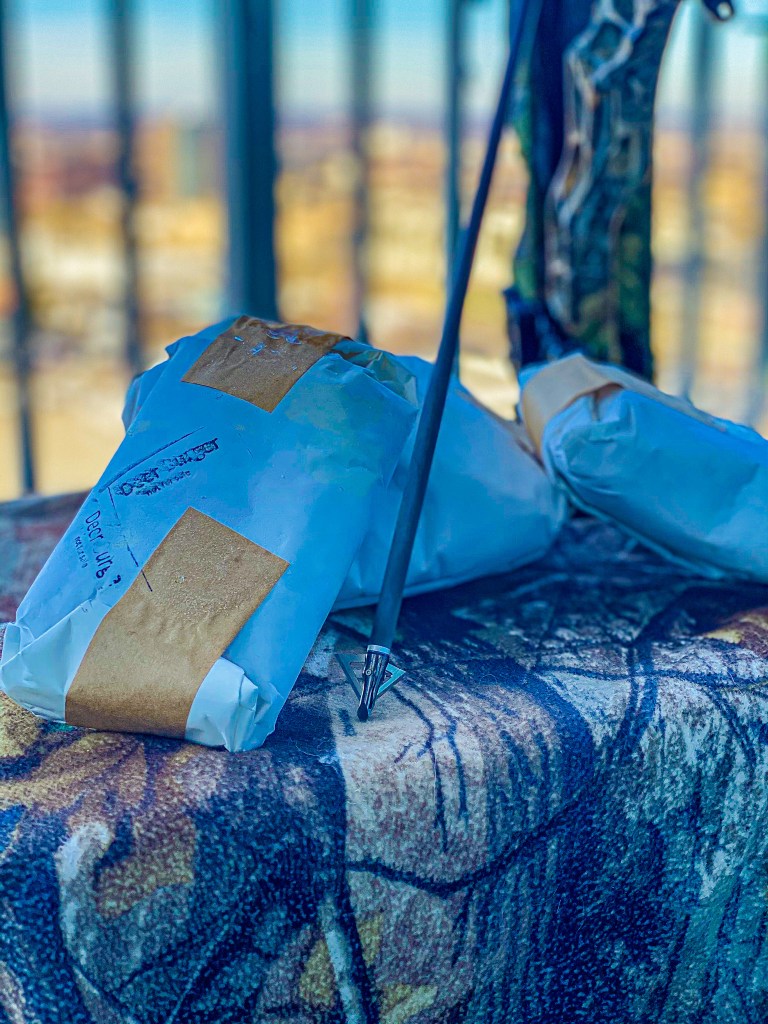
As we continue our look at the more ethereal and ethical side of hunting, I want us to delve into one of my favorite topics. I like to call it, “Wildgame Diplomacy.” I am almost certain I did not originate this term, but I use it a lot. For many years now, where I live has become increasingly urbanized. So much so, that for many of my friends and acquaintances, I am the only hunter they really know. Their opinion of hunters and hunting, as a whole, is dependent on me. That’s a responsibility I do not take lightly and one of the ways I ensure to always leave a good impression is through the sharing of meat.
I preach the food acquisition angle of hunting most of the time. It truly is the main reason I hunt. I love to cook, and my goal every year is to have enough success in the field to not have to worry about buying meat. It’s also the easiest way to share your passion with people who might be on the fence. You can literally give people a reason they can taste. “Wildgame Diplomacy” is something every hunter and angler should be active in.
Having a hand in every aspect of the food you consume is wildly empowering. It also lends itself to a departure in consuming all those hormones and chemicals that we are trying to get away from these days. This idea has led to not only the recruitment of more new hunters in this generation, but also hunting having its highest approval rating in the last 25 years. According to the Deer Association, formerly QDMA, hunting for the meat has an approval rating of 84%, per a 2019 study. Not only is the food acquisition angle the easiest for people outside of the hunting world to stomach, see what I did there, it is also the easiest to share.
If you are a hunter you should also be a chef. You should feel just as comfortable with flour on your hands as you do with dirt on them. I am not saying you need to make French Patisserie with bear fat, or a litany of complicated recipes, but you need a few go to crowd pleasers for friends and family for each animal you hunt. I have found that new recipes have even inspired me to butcher differently or even to keep parts of animals that are traditionally not kept. There are some incredible wild game inspired cook books from chefs that are also hunters. The one I end up stealing from probably more than anyone is Hank Shaw. Go follow him, buy his cookbooks, and listen to his podcast. He’s all about eating things from the ground up and will inspire you to do so as well.
As always there is another side to every coin. It was Shakespeare who penned, “The evil that men do lives after them, but the good is oft interred with their bones.” You can do a million great things, but you are most remembered by what you did wrong. Or, in this conversation, you are judged by the worst of your segment, not the best. It’s not fair, however that’s how it goes. As hunters, the general public forgets about the scholarly conservationist who helped save wildlife in this country when we almost had none left. They simply remember scandals and poachers who got the headlines. Even this year, I have found three different deer that were left disrespected to rot. A spike buck killed and left, most probably because the hunter mistook it for a doe. Also, two young does with just the backstraps pulled and everything else left to feed the buzzards. The term for this kind of misuse of the resource is called wanton waste, and it is something for which hunters are judged most harshly. By the way, wanton waste is not what happens when you don’t finish your appetizer at a Chinese restaurant. It is, “To intentionally waste something negligently or inappropriately.” You’ll be hard pressed to find a state that doesn’t have some semblance of a “wanton waste” law on their books. However, these kinds of wildlife crimes often go unpunished.
Even if you are a hunter that doesn’t like eating the meat yourself, you don’t have much of an excuse to add to the wanton waste. There are many different programs that take wild game and distribute it to food banks, giving them a much-needed source of fresh protein that they would be very unlikely to get otherwise. Check out the HUSH program in Iowa, and Hunters For the Hungry is in several states. These programs allow hunters who find themselves at a surplus of meat or maybe lacking the required time to butcher properly a solution that saves them time, helps the community, and allows for no waste of the resource. Most of the more experienced hunters are aware of this, however I have seen new hunters and non-hunters be completely unaware of this.
The way to everyone’s heart is through their stomach, not just men. So, as we go through this year, engage in a bit of Wildgame Diplomacy. Win over that “judgey” neighbor with some jerky. Send that sweet old lady down the block some stew. Fry some fish with a friend on the fence. Make backstrap for a bud. Osso buco for your boss-o… you get it. Just get cooking.
 A Day in the Field